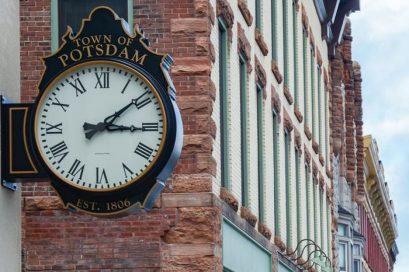

The village of Potsdam is currently in the middle of its 193rd fiscal year! Yes you read that correctly: our village was incorporated in 1831 so we have nearly 200 budgets under our belt!
Village budgets start anew every June 1, so our current fiscal year ends May 31, 2025. Before looking at the design of next year’s budget, which will itemize where all our municipal dollars are spent, first a brief overview on how many tax dollars businesses and residents contribute to maintain village operations.
Property owners in the village paid $17.48 per thousand dollars in property value in 2024. For example, if the Assessor listed a residential home’s assessed value at $100,000, then that owner owed $1,748.00 in village taxes. If a property’s assessed value is twice that, or $200,000, then the owner paid twice as much, or nearly $3,500 in village property-taxes.
It is worth keeping in mind that commercial enterprises, including apartment owners, pay exactly the same village property-tax rate as residential (“R1”) owners. This is significant since businesses are always assessed at much higher valuations: For example, my neighbor’s $150,000 home sits on 0.9 acres of land and contributes $2600 in taxes (rounding a bit). The new Stewart’s Shop on Market St. sits on a smaller 0.7 acres, but it has a market value of nearly $1,000,000 and so pays closer to $17,000 in village taxes. Germaine to the current discussion: If this business, with the same assessed value, had been located in neighboring Canton, it would have paid $10.75 per thousand, or around $10,000 in Canton village taxes. The difference, of around $7,000 is “real” money, being equivalent to nearly 500 NY minimum-wage hours of labor. (Note, interestingly, that when businesses shutter for whatever reason, the owner continues to pay the same amount of village taxes lest the County assumes ownership of that property.)
As the current and following blog posts will follow the development of the next village budget, we need to ask whether the village property-tax is all the tax that residents pay towards village government? No! Residents also pay a fee for water and sewer services. How much? That depends on how much water customers use (there is one water meter per customer), but let’s assume that a customer uses 120 gallons per day. (This amount of water consumption is referred to as 1 EDU or Equivalent Dwelling Unit). A one-family home then would pay $742.85 annually towards municipal water and sewer services. Businesses that use a lot of water, whether a car wash or a laundromat or a college dormitory, may pay 10 or 100 times this amount. (Yes, non-profits also pay water and sewer fees.)
So for example, if my $150,000 home uses about 120 gallons of water per day, I must pay the village nearly $3,400 in village combined taxes. Next I will try to summarize what operations and services these dollars enable, before posing the question: would it make sense to activate a different tax rate for commercial vs non-commercial enterprises?
 Local Government Matters